Crawl Space Encapsulation Loris, SC
Loris sits at the northern apex of our Horry County service triangle in a soil transition zone that produces a crawl space moisture profile distinct from both the barrier island beachfront and the deep inland clay country further northwest. The sandy coastal plain soils of the Grand Strand thin and transition here toward mixed soils with increasing clay content — a profile that creates moderate ground moisture retention without the extreme hydrostatic pressure dynamics of the heavy clay loam zones around Conway and Aynor. At the same time, Loris is far enough inland that the marine humidity influence is attenuated but not eliminated — summer relative humidity at the Loris elevation typically runs 5 to 10 percentage points below peak coastal values, but that still leaves ambient humidity at levels that drive condensation in unencapsulated crawl spaces throughout the warm months.
Schedule a Free Crawl Space Inspection
Call (843) 585-3994 or send a quick note below.
Why Loris, SC Crawl Spaces Struggle With Moisture
Loris grew up as a farming and tobacco town, and it still hosts the Loris Bog-Off Festival each fall. Much of the housing here is older single-family homes in town and farmhouses on surrounding rural land, and older homes often still have open foundation vents with bare or partly covered soil underneath. On rural parcels, low spots, drainage ditches, and long stretches of wet weather can keep ground moisture high around a foundation well after a storm. Because conditions vary so much between in-town lots and country properties, an inspection starts with where the water is coming from before recommending a vapor barrier, encapsulation, or a dehumidifier.
What Crawl Space Inspections in Loris Often Turn Up
Inside the City of Loris, older homes on brick piers and block foundations are common, and permits go through the city. Outside town, farmhouses and homes on rural lots fall under Horry County. Inspections here often find bare soil or plastic that covers only part of the ground, ductwork with torn insulation, and mildew on joists after wet spells. Wells, septic lines, and outbuildings can affect where water collects around a foundation, and any plumbing or electrical issues found are referred to licensed professionals.
Signs of a Crawl Space Moisture Problem
- Musty odors in the living area, often strongest near floor vents.
- Cupping hardwood floors, where board edges curl upward from moisture below.
- Sweating ductwork dripping onto insulation that sags or falls.
- White or gray growth on joists or insulation backing. Learn about crawl space mold.
- A sticky house even while the air conditioner runs.
Crawl Space Services in Loris
Every visit starts with what the crawl space is actually showing: moisture readings, standing water, and the condition of the vapor barrier, insulation, and ductwork. Each service below links to a page explaining what the work involves, and the full services overview shows how they fit together. Electrical, plumbing, and pest work is referred to licensed professionals.
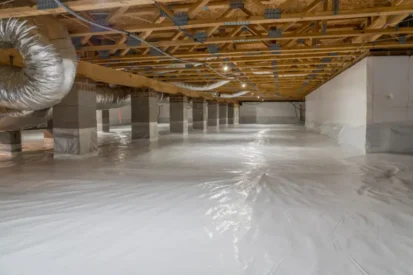
Crawl Space Encapsulation
Older Loris homes on brick piers often start with covering bare ground and checking the framing before sealing. Rural homes may need drainage looked at first.
Vapor Barrier Installation
Plastic that covers only part of the ground is common in Loris. A continuous barrier over all of it, sealed and carried up the walls, is the usual fix.
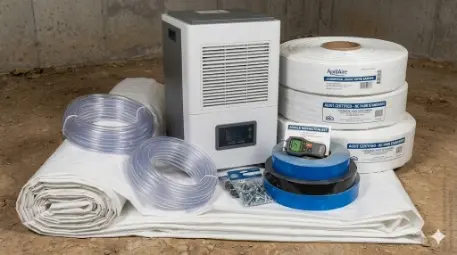

Crawl Space Dehumidification
Inland humidity is lower than at the beach but still high enough to keep a sealed crawl space damp. A dehumidifier sized to the space keeps it dry.
Crawl Space Insulation
Ductwork with torn insulation and sagging batts are frequent finds in older Loris homes. Both are replaced to match the crawl space approach.
Crawl Space Mold Remediation
Mildew on joists after wet spells is common here. Remediation treats the growth, and moisture control helps keep it from returning.
Frequently Asked Questions
Is crawl space encapsulation required by SC building code?
No. Under the 2021 South Carolina Residential Code, a vented crawl space is still allowed. Section R408.3 adds the option of a sealed crawl space when the ground is covered with a continuous Class I vapor retarder, seams overlap at least 6 inches and are sealed, the edges run at least 6 inches up the stem wall, and the space is conditioned, for example with a dehumidifier sized at 70 pints per day per 1,000 square feet. Homes in flood zones also need their required flood openings kept working.
How much does crawl space encapsulation cost in Loris, SC?
In Loris, scope depends on how much of the ground is already covered, the condition of the foundation and framing, how water drains around the house, and the crawl space’s size. A free inspection gives you an accurate price.
Does encapsulation add value to a home in Loris?
Many Loris homes are older, and buyers’ inspectors commonly look closely at the crawl space. A dry, documented crawl space may help an older home sell more smoothly, though the effect varies.
Loris
Request a Free Inspection or Call (843) 585-3994
Not in Loris? See the other Grand Strand communities we serve.