Crawl Space Encapsulation Little River, SC
Little River properties along the Intracoastal Waterway face a compounding moisture load from both the ground and the air. The Waterway corridor creates a tidal influence zone where the water table responds not just to rainfall but to tidal fluctuation — meaning the effective depth to groundwater beneath beachside and near-Waterway properties shifts daily. On top of this dynamic water table, the sandy coastal plain soils of northern Horry County offer minimal resistance to upward capillary moisture movement. When summer outdoor humidity exceeds 80% and warm marine air enters through foundation vents, it meets sub-floor surfaces cooled by this shallow ground environment — and condensation follows. The moisture load here comes from two directions simultaneously: rising ground moisture and descending condensation from humid air above.
Schedule a Free Crawl Space Inspection
Call (843) 585-3994 or send a quick note below.
Why Little River, SC Crawl Spaces Struggle With Moisture
Waterfront and near-Waterway properties in Little River carry an additional complication that separates them from most inland Horry County homes: FEMA Special Flood Hazard Area designations. Many properties in AE and VE flood zones are required under NFIP guidelines to maintain flood vents — engineered openings designed to equalize hydrostatic pressure during flood events. A contractor who seals all foundation vents on a flood-zone Little River property without assessing FEMA compliance may create an insurance and code issue that surfaces at the next sale. The correct approach is a site-specific flood zone assessment before any encapsulation design begins — confirming whether the property requires flood vents and how a sealed system can be designed around that requirement.
What Crawl Space Inspections in Little River Often Turn Up
Little River is one of the oldest communities on the Grand Strand, a fishing village on the Intracoastal Waterway that still hosts the Blue Crab Festival on its waterfront each spring. Housing ranges from older homes near the waterfront and Mineola Avenue to newer subdivisions inland from US 17. Inspections near the water often find vapor barriers never sealed to the foundation walls, rusted hangers and fasteners, and ductwork sweating through the summer. Inland subdivisions tend to show the builder’s original 6-mil plastic with gaps and insulation pulling away from the subfloor. Because Little River is unincorporated, permits for crawl space work go through Horry County.
Signs of a Crawl Space Moisture Problem
- Musty odors in the living area, often strongest near floor vents.
- Cupping hardwood floors, where board edges curl upward from moisture below.
- Sweating ductwork dripping onto insulation that sags or falls.
- White or gray growth on joists or insulation backing. Learn about crawl space mold.
- A sticky house even while the air conditioner runs.
Crawl Space Services in Little River
Every visit starts with what the crawl space is actually showing: moisture readings, standing water, and the condition of the vapor barrier, insulation, and ductwork. Each service below links to a page explaining what the work involves, and the full services overview shows how they fit together. Electrical, plumbing, and pest work is referred to licensed professionals.
Crawl Space Encapsulation
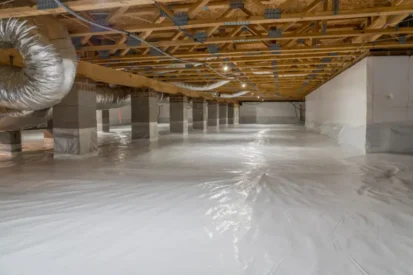
Near the Waterway, a sealed design has to account for flood openings and salt air, so liners, fasteners, and vent covers are chosen with corrosion in mind. Inland Little River homes off US 17 are often a more standard seal-and-condition job.
Vapor Barrier Installation
Many Little River crawl spaces have builder plastic that was laid loose and never sealed to the walls. Replacing it with a continuous, taped barrier carried up the foundation is often the first step.

Crawl Space Dehumidification
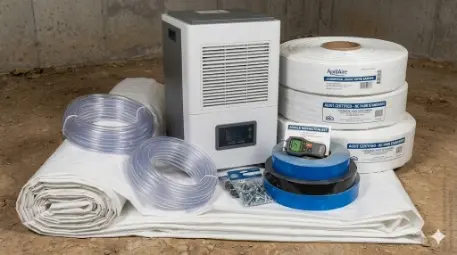
Waterway humidity can keep a sealed Little River crawl space damp unless it is conditioned. A dehumidifier sized to the space and drained outside is the most common option.
Crawl Space Insulation
Paper-faced batts in older waterfront homes often sag or fall once they soak up summer humidity. Removing wet insulation and choosing the right replacement depends on whether the space will be vented or sealed.
Crawl Space Mold Remediation
White or gray growth on joists is common in older Little River crawl spaces near the water. Remediation addresses the growth, and controlling the moisture behind it helps keep it from returning.
Frequently Asked Questions
Is crawl space encapsulation required by SC building code?
No. Under the 2021 South Carolina Residential Code, a vented crawl space is still allowed. Section R408.3 adds the option of a sealed crawl space when the ground is covered with a continuous Class I vapor retarder, seams overlap at least 6 inches and are sealed, the edges run at least 6 inches up the stem wall, and the space is conditioned, for example with a dehumidifier sized at 70 pints per day per 1,000 square feet. Homes in flood zones also need their required flood openings kept working.
How much does crawl space encapsulation cost in Little River, SC?
In Little River, the biggest variable is how close the home sits to the Waterway. Near-water lots may need flood openings kept working or replaced with engineered flood vents, plus materials chosen for salt air, while inland homes are often a more standard sealing job. Crawl space height, access, and any wet insulation that has to come out also matter. A free inspection gives you an accurate price for your property.
Does encapsulation add value to a home in Little River?
Near the Waterway, buyers and their inspectors tend to ask about moisture, wood condition, and flood zone status. A sealed crawl space with documented moisture readings and working flood openings may answer those questions before they come up, though the effect on value varies by home.
Little River
Request a Free Inspection or Call (843) 585-3994
Not in Little River? See the other Grand Strand communities we serve.