Crawl Space Encapsulation in Myrtle Beach & Horry County
A musty first floor, hardwood that cups every summer, insulation hanging from the joists, a house that feels sticky with the AC running. Along the Grand Strand, these usually trace back to the same place: moisture in the crawl space.
Summer dew points here sit in the low 70s for weeks. Much of Horry County has a seasonal high water table close to grade. And the space under the house is where those two meet.
Crawlspace Cure Myrtle Beach focuses on one thing: crawl space moisture. That includes encapsulation, vapor barriers, dehumidification, mold remediation, and insulation, throughout Horry County, from North Myrtle Beach and Little River to Surfside Beach, Conway, and Pawleys Island.
- Free on-site crawl space inspection
- Written findings with photographs
- Designed around SC building code R408.3 and FEMA flood zone requirements
Call (843) 585-3994 or request an inspection with the form.
Request a Free Inspection
What’s Happening Under Grand Strand Homes?
Horry County doesn’t have one crawl space problem. It has three, and they need different answers.
- Beachside condensation. In North Myrtle Beach, Surfside Beach, and Garden City Beach, humid ocean air pours through foundation vents and condenses on cooled ductwork and subfloor, over a water table that can sit within a couple of feet of grade.
- Marsh and Intracoastal moisture. Near the water in Little River, Socastee, and Murrells Inlet, the water table rises and falls with the tide, pushing moisture up and sideways into the crawl space.
- Inland clay pressure. Around Conway and Aynor, slow-draining clay soils hold rainwater against block foundation walls. Problems get worse after rain rather than in summer heat.
Knowing which one is at work under a particular home is where every useful assessment starts.
Crawl Space Services in Myrtle Beach
Each service below links to a detailed page explaining what the work involves and what to ask before hiring anyone. See the full services overview.
Crawl Space Encapsulation
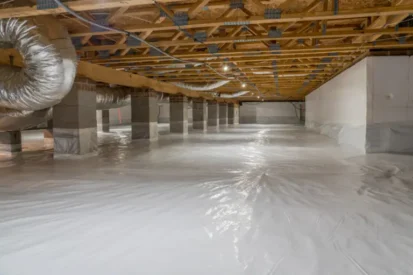
A sealed, conditioned crawl space instead of an open, vented one. That means a reinforced liner over the ground, piers, and walls; sealed vents and rim joists; and mechanical humidity control. It is the most complete approach for coastal homes.
Related: vapor barrier installation.
Crawl Space Dehumidification
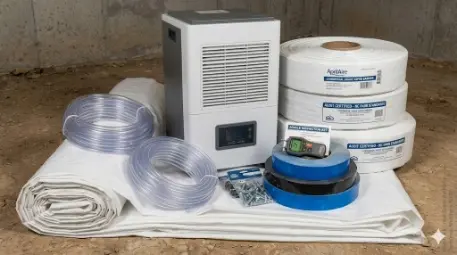
A sealed crawl space still needs its humidity controlled, and South Carolina’s code requires an accepted conditioning method. A dedicated dehumidifier, sized to the space and drained to the exterior, is the most common choice along the Grand Strand.
Related: crawl space mold remediation and crawl space insulation.

Code & Flood Zone Compliance
Sealed crawl spaces in South Carolina follow Section R408.3 of the residential code. Many beachside and Intracoastal homes also sit in FEMA flood zones, where required flood openings have to stay functional. See how flood vents work in a sealed crawl space.
Signs of a Crawl Space Moisture Problem
- A musty odor on the lower floor. It’s often strongest in the morning and near floor registers. Houses pull air upward from the crawl space, so what’s under the floor ends up in the living space. See why lower floors smell musty.
- Cupping hardwood floors. When board edges rise above the center, the underside is wetter than the top. See why floors cup in coastal South Carolina.
- Sweating ductwork and pipes. Humid air condenses on surfaces the AC has cooled.
- Sagging or fallen insulation, one of the most common findings in Horry County home inspections.
- White or gray growth on joists or on the paper facing of insulation.
- A sticky house even with the AC running. See why that happens.
How a Free Crawl Space Inspection Works
- Schedule a visit anywhere in Horry County.
- On-site assessment: humidity and wood moisture readings, vapor barrier and insulation condition, moisture entry points, and flood zone status.
- Written findings with photographs, so you can see what’s under your home.
- An itemized estimate if work makes sense, with each line explaining what it addresses. The decision stays yours.
Accurate pricing comes from the inspection. Learn more on the contact page.
Frequently Asked Questions
How much does crawl space encapsulation cost in Myrtle Beach?
Cost depends on the size of the crawl space, the liner specification, whether insulation removal or mold treatment is needed, whether liquid water must be managed, flood vent requirements, and how the space will be conditioned. Because those factors vary widely from home to home, a free on-site inspection provides accurate pricing for your specific property.
Why does my crawl space sweat in the summer?
From late spring through early fall, Grand Strand dew points often sit in the low 70s. When that outdoor air comes through foundation vents and touches ductwork, pipes, and subfloor that the air conditioner has cooled below the dew point, moisture condenses on those surfaces. It is the same effect as a cold glass sweating on a porch, and it repeats daily through the warm season.
Should I close my crawl space vents in Myrtle Beach?
Closing vents without sealing the ground and conditioning the space can trap moisture rather than remove it. A sealed crawl space under South Carolina’s code needs a continuous sealed vapor retarder and an accepted conditioning method, and homes in FEMA flood zones must keep required flood openings functional. Closing vents works as part of a complete system, not on its own.
Do I need a permit for crawl space encapsulation in Horry County?
Sealing a crawl space and installing related equipment is typically permitted work. Requirements vary by jurisdiction: Myrtle Beach, North Myrtle Beach, Conway, Surfside Beach, and unincorporated Horry County each have their own building departments, and some southern Grand Strand properties fall under Georgetown County. Confirm with the building department for your address before work begins.