Crawl Space Encapsulation Galivants Ferry, SC
Galivants Ferry occupies one of the furthest inland positions in our Horry County service area, situated along the Little Pee Dee River in terrain where the coastal plain influence has largely given way to the soil and drainage characteristics of interior South Carolina. The Little Pee Dee River floodplain creates a specific crawl space moisture dynamic for properties in low-lying areas near the river — seasonal flooding events can temporarily raise the effective groundwater level significantly above its normal depth, creating acute hydrostatic loading on foundation systems designed for typical dry-season conditions. Properties built in the river floodplain at Galivants Ferry have experienced this cycle repeatedly, and the foundation masonry in older homes here often shows the staining and efflorescence that indicate long-term moisture migration through the walls.
Schedule a Free Crawl Space Inspection
Call (843) 585-3994 or send a quick note below.
Why Galivants Ferry, SC Crawl Spaces Struggle With Moisture
The rural character of Galivants Ferry means that many properties here were built to agricultural or vernacular construction standards that predate modern residential building codes. Crawl spaces in older rural Horry County properties frequently have no vapor barrier at all — just exposed earth beneath the floor joists, with no barrier between the moisture-laden soil and the wood framing above. In some cases the crawl space access is restricted or the space has never been professionally inspected. When assessments do reach these properties — typically at the point of sale or when interior symptoms become undeniable — the findings can include wood moisture content readings well above the damage threshold, active fungal growth on framing, and structural deterioration that reflects decades of unmanaged moisture exposure.
What Crawl Space Inspections in Galivants Ferry Often Turn Up
Galivants Ferry is a small rural community where US 501 crosses the Little Pee Dee River, best known for the Galivants Ferry Stump Meeting, a political gathering held there since 1876. Much of the area is farmland with older farmhouses, tobacco barns, and a historic district around the crossroads. Inspections often find no vapor barrier at all, brick piers with damp bases, and framing that shows past high water near the river. Permits go through Horry County.
Signs of a Crawl Space Moisture Problem
- Musty odors in the living area, often strongest near floor vents.
- Cupping hardwood floors, where board edges curl upward from moisture below.
- Sweating ductwork dripping onto insulation that sags or falls.
- White or gray growth on joists or insulation backing. Learn about crawl space mold.
- A sticky house even while the air conditioner runs.
Crawl Space Services in Galivants Ferry
Every visit starts with what the crawl space is actually showing: moisture readings, standing water, and the condition of the vapor barrier, insulation, and ductwork. Each service below links to a page explaining what the work involves, and the full services overview shows how they fit together. Electrical, plumbing, and pest work is referred to licensed professionals.
Crawl Space Encapsulation
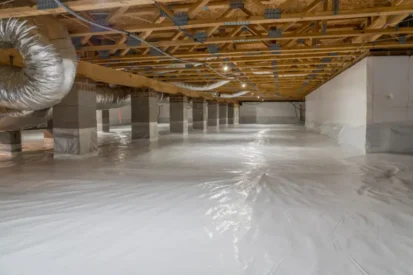
Many Galivants Ferry farmhouses have no vapor barrier at all, so encapsulation starts with covering the ground and checking piers and framing. Homes near the river need flood-zone planning.
Vapor Barrier Installation
Exposed earth under the floor is common in older rural homes here. A continuous barrier over the ground is often the single biggest improvement.

Crawl Space Dehumidification
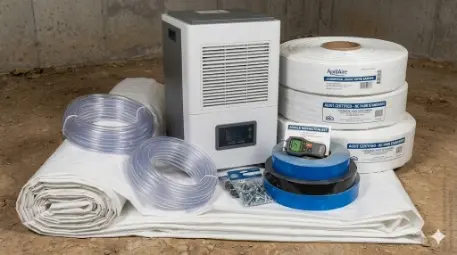
Inland humidity and river-bottom moisture can keep a sealed crawl space damp. A dehumidifier sized to the space keeps it in check.
Crawl Space Insulation
Older farmhouses often have little or no insulation under the floor, or insulation that has fallen. Replacement is planned once moisture is under control.
Crawl Space Mold Remediation
Framing that shows past high water near the river can grow mold. Remediation treats it, and drying the space helps keep it away.
Frequently Asked Questions
Is crawl space encapsulation required by SC building code?
No. Under the 2021 South Carolina Residential Code, a vented crawl space is still allowed. Section R408.3 adds the option of a sealed crawl space when the ground is covered with a continuous Class I vapor retarder, seams overlap at least 6 inches and are sealed, the edges run at least 6 inches up the stem wall, and the space is conditioned, for example with a dehumidifier sized at 70 pints per day per 1,000 square feet. Homes in flood zones also need their required flood openings kept working.
How much does crawl space encapsulation cost in Galivants Ferry, SC?
In Galivants Ferry, scope depends on whether any vapor barrier exists, the condition of piers and framing, how close the home is to the river, and the crawl space’s size and access. A free inspection gives you an accurate price.
Does encapsulation add value to a home in Galivants Ferry?
Older farmhouses here often sell to buyers who plan to restore them, and their inspectors commonly look at the crawl space first. Documented moisture control may make a sale smoother, though the effect varies.
Galivants Ferry
Request a Free Inspection or Call (843) 585-3994
Not in Galivants Ferry? See the other Grand Strand communities we serve.