Crawl Space Encapsulation Aynor, SC
Aynor sits in the Pee Dee region of inland Horry County where the soil profile shifts decisively away from the sandy coastal plain toward heavier, slower-draining soils with more clay. These soils hold water after rainfall events — saturation can persist for days rather than hours, and during the extended wet periods common to South Carolina’s spring and fall seasons, the soil column against foundation walls maintains sustained hydrostatic pressure. This pressure forces moisture through masonry mortar joints and block cores into the crawl space continuously during wet seasons, independent of outdoor humidity levels. The moisture problem in an Aynor crawl space is primarily a soil drainage and foundation permeability problem — not a ventilation or humidity problem, as it would be classified in a beachside community.
Schedule a Free Crawl Space Inspection
Call (843) 585-3994 or send a quick note below.
Why Aynor, SC Crawl Spaces Struggle With Moisture
Understanding this distinction matters for crawl space system design in Aynor. A contractor who applies a standard coastal encapsulation approach — seal the vents, install a vapor barrier, add a dehumidifier — to an Aynor property without first addressing the lateral soil moisture pathway may find that the dehumidifier runs continuously without achieving target humidity levels because ground moisture is actively entering through the foundation walls faster than the unit can extract it from the air. The correct assessment sequence for an inland Aynor property includes foundation wall inspection for moisture migration evidence, soil saturation assessment around the perimeter, and drainage evaluation before specifying the encapsulation system design.
What Crawl Space Inspections in Aynor Often Turn Up
Aynor is a small town on US 501 west of Conway, known for its Harvest Hoe-Down Festival each September and surrounded by farmland and woods. Many homes are older houses in town or on rural lots, often on brick piers or block foundations. Inspections commonly find bare soil or torn plastic, water staining on foundation walls after long wet spells, and mildew on joists. Permits go through the Town of Aynor inside town limits and Horry County outside.
Signs of a Crawl Space Moisture Problem
- Musty odors in the living area, often strongest near floor vents.
- Cupping hardwood floors, where board edges curl upward from moisture below.
- Sweating ductwork dripping onto insulation that sags or falls.
- White or gray growth on joists or insulation backing. Learn about crawl space mold.
- A sticky house even while the air conditioner runs.
Crawl Space Services in Aynor
Every visit starts with what the crawl space is actually showing: moisture readings, standing water, and the condition of the vapor barrier, insulation, and ductwork. Each service below links to a page explaining what the work involves, and the full services overview shows how they fit together. Electrical, plumbing, and pest work is referred to licensed professionals.
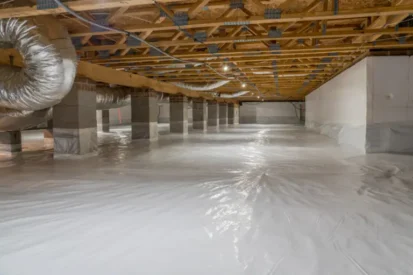
Crawl Space Encapsulation
In Aynor, water moving through foundation walls is often the main source, so drainage is assessed before encapsulation is designed.
Vapor Barrier Installation
Bare soil or torn plastic is common under older Aynor homes. A continuous, sealed barrier over the ground and up the walls cuts moisture from below.
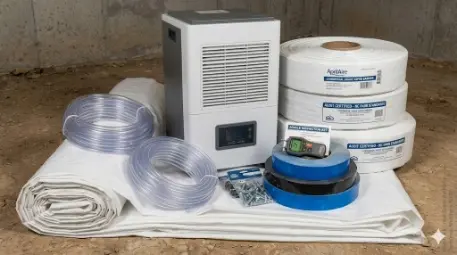

Crawl Space Dehumidification
If water is entering through the walls, a dehumidifier can run constantly without catching up. Sizing it after drainage is addressed matters here.
Crawl Space Insulation
Insulation in older homes on brick piers often sags or falls after wet spells. It is replaced once the moisture source is handled.
Crawl Space Mold Remediation
Mildew on joists after long wet seasons is a common Aynor find. Remediation and moisture control are handled together.
Frequently Asked Questions
Is crawl space encapsulation required by SC building code?
No. Under the 2021 South Carolina Residential Code, a vented crawl space is still allowed. Section R408.3 adds the option of a sealed crawl space when the ground is covered with a continuous Class I vapor retarder, seams overlap at least 6 inches and are sealed, the edges run at least 6 inches up the stem wall, and the space is conditioned, for example with a dehumidifier sized at 70 pints per day per 1,000 square feet. Homes in flood zones also need their required flood openings kept working.
How much does crawl space encapsulation cost in Aynor, SC?
In Aynor, scope often depends on how much water moves through the foundation walls, whether drainage needs attention first, how much of the ground is covered, and the crawl space’s size. A free inspection gives you an accurate price.
Does encapsulation add value to a home in Aynor?
Older Aynor homes draw buyers who want rural space, and their inspectors commonly check the crawl space. A dry, documented crawl space may help a sale go smoothly, though the effect varies.
Aynor
Request a Free Inspection or Call (843) 585-3994
Not in Aynor? See the other Grand Strand communities we serve.