Crawl Space Encapsulation Conway, SC
Conway homeowners deal with a crawl space moisture mechanism that differs from what beachside homes see. The heavier, clay-rich soils common across inland Horry County drain far more slowly than the sandy coastal soils near the beach — meaning when Conway receives heavy rainfall, that water has nowhere to go quickly. It saturates the soil column against foundation walls, builds hydrostatic pressure, and forces moisture laterally through masonry joints and cracks into the crawl space. This mechanism — lateral soil moisture pressure — is fundamentally different from the psychrometric condensation that affects beachside properties. A moisture assessment approach designed for coastal condensation may miss the primary moisture pathway in a Conway clay soil property, leading to a system design that addresses the symptom rather than the source.
Schedule a Free Crawl Space Inspection
Call (843) 585-3994 or send a quick note below.
Why Conway, SC Crawl Spaces Struggle With Moisture
Conway’s riverfront historic district and the residential neighborhoods surrounding Coastal Carolina University contain housing stock that has experienced this clay soil hydrostatic pressure cycle for decades. In many of these older homes, the evidence is visible in the masonry itself — efflorescence on block foundation walls indicates long-term moisture migration through the masonry, and in some cases the mortar joints show progressive deterioration from sustained hydrostatic loading. The Waccamaw River floodplain introduces an additional variable for Conway properties in the lowest elevations: during major storm events the river backs up significantly, raising the effective groundwater level and intensifying the lateral moisture pressure on foundation systems. Properties within the 100-year floodplain require FEMA flood zone assessment as part of any encapsulation design process.
What Crawl Space Inspections in Conway Often Turn Up
Conway is the Horry County seat, built along the Waccamaw River, with a downtown Riverwalk and historic streets shaded by old live oaks. During Hurricane Florence in 2018, the Waccamaw rose to record levels and flooded neighborhoods across the city. Inspections in older Conway homes often find white mineral deposits on block foundation walls, damp soil along the uphill side, and framing that shows past water. Near Coastal Carolina University, many homes are rentals with crawl spaces that rarely get checked. Inside city limits, permits go through the City of Conway.
Signs of a Crawl Space Moisture Problem
- Musty odors in the living area, often strongest near floor vents.
- Cupping hardwood floors, where board edges curl upward from moisture below.
- Sweating ductwork dripping onto insulation that sags or falls.
- White or gray growth on joists or insulation backing. Learn about crawl space mold.
- A sticky house even while the air conditioner runs.
Crawl Space Services in Conway
Every visit starts with what the crawl space is actually showing: moisture readings, standing water, and the condition of the vapor barrier, insulation, and ductwork. Each service below links to a page explaining what the work involves, and the full services overview shows how they fit together. Electrical, plumbing, and pest work is referred to licensed professionals.
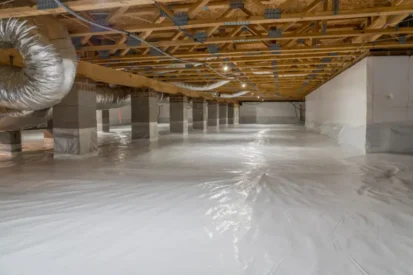
Crawl Space Encapsulation
In Conway, water often moves through foundation walls from the surrounding soil, so drainage gets checked before encapsulation. Homes near the Waccamaw also need flood-zone planning.
Vapor Barrier Installation
A vapor barrier carried up the foundation walls helps where white mineral deposits show water moving through the block. Ground drainage is addressed first.
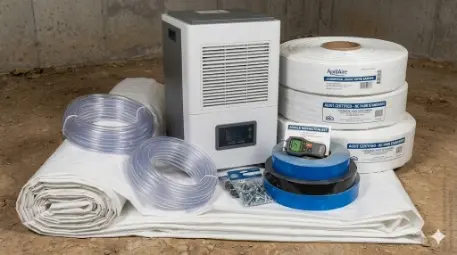

Crawl Space Dehumidification
When water is entering through the walls, a dehumidifier alone can run constantly. Sizing the unit after drainage is addressed gives it a realistic job.
Crawl Space Insulation
Insulation in older Conway homes often holds moisture from damp walls and soil. It is replaced once the moisture source is understood.
Crawl Space Mold Remediation
Framing that shows past water, common after Florence, can grow mold. Remediation treats it, and drying the space helps keep it away.
Frequently Asked Questions
Is crawl space encapsulation required by SC building code?
No. Under the 2021 South Carolina Residential Code, a vented crawl space is still allowed. Section R408.3 adds the option of a sealed crawl space when the ground is covered with a continuous Class I vapor retarder, seams overlap at least 6 inches and are sealed, the edges run at least 6 inches up the stem wall, and the space is conditioned, for example with a dehumidifier sized at 70 pints per day per 1,000 square feet. Homes in flood zones also need their required flood openings kept working.
How much does crawl space encapsulation cost in Conway, SC?
In Conway, scope often depends on how much water is moving through the foundation walls, whether drainage needs attention first, flood zone status near the river, and the crawl space’s size. A free inspection gives you an accurate price.
Does encapsulation add value to a home in Conway?
After Florence, Conway buyers and their inspectors often ask about water history and crawl space condition. A dry, documented crawl space may help answer those questions, though the effect on value varies.
Conway
Request a Free Inspection or Call (843) 585-3994
Not in Conway? See the other Grand Strand communities we serve.