Crawl Space Encapsulation Carolina Forest, SC
Carolina Forest presents a crawl space moisture challenge that is directly tied to its development history. The community was built primarily on pine flatwoods and filled lowland terrain — land that was previously low-elevation, poorly drained pine barrens and swamp between Conway and Myrtle Beach. When developers graded and filled this terrain to create the master-planned subdivisions that now define Carolina Forest, the fill materials introduced were not always uniformly compacted or matched to the drainage characteristics of the surrounding soils. The result in many subdivisions is a sub-surface environment where ground moisture accumulates against foundation systems at rates higher than would be expected from a natural upland site — and where the effective depth to groundwater can be significantly shallower than regional averages suggest.
Schedule a Free Crawl Space Inspection
Call (843) 585-3994 or send a quick note below.
Why Carolina Forest, SC Crawl Spaces Struggle With Moisture
The rapid development pace of Carolina Forest through the 1990s and 2000s means that a large proportion of the housing stock was built during a period when SC crawl space encapsulation standards were still evolving. Homes built before SC adopted R408.3 provisions for unvented crawl spaces may have crawl space systems designed to the older vented standard that building science has since shown to be counterproductive in humid coastal climates. Subdivisions built on lower-elevation sections of the former flatwoods terrain — particularly those adjacent to retention ponds and drainage features — warrant particular attention in crawl space assessments, as the sub-surface moisture environment in these areas often exceeds what the original construction anticipated.
What Crawl Space Inspections in Carolina Forest Often Turn Up
Carolina Forest spreads along Carolina Forest Boulevard and International Drive between US 501 and SC 31, with dozens of subdivisions and the Lewis Ocean Bay Heritage Preserve nearby. Many homes here are built on slabs, but those with crawl spaces were often finished with a basic builder vapor barrier and open vents. Retention ponds sit behind many lots, and heavy summer storms can leave yards wet for days. Inspections commonly find water pooling on top of loose plastic, sweating ductwork, and dehumidifiers that are undersized or draining poorly. If you are weighing a crawl space dehumidifier, an inspection can show what the space actually needs first.
Signs of a Crawl Space Moisture Problem
- Musty odors in the living area, often strongest near floor vents.
- Cupping hardwood floors, where board edges curl upward from moisture below.
- Sweating ductwork dripping onto insulation that sags or falls.
- White or gray growth on joists or insulation backing. Learn about crawl space mold.
- A sticky house even while the air conditioner runs.
Crawl Space Services in Carolina Forest
Every visit starts with what the crawl space is actually showing: moisture readings, standing water, and the condition of the vapor barrier, insulation, and ductwork. Each service below links to a page explaining what the work involves, and the full services overview shows how they fit together. Electrical, plumbing, and pest work is referred to licensed professionals.
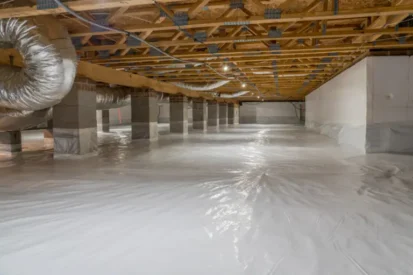
Crawl Space Encapsulation
Where Carolina Forest homes have crawl spaces, encapsulation often means upgrading a basic builder barrier, sealing the vents, and adding conditioning. Yard drainage near retention ponds is checked first.
Vapor Barrier Installation
Water pooling on top of loose builder plastic is a common Carolina Forest find. A sealed, continuous barrier, with any drainage issue addressed first, keeps water off the liner.
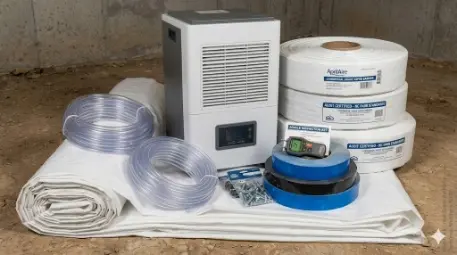

Crawl Space Dehumidification
Searching for dehumidifiers in Carolina Forest? Sizing matters: the unit should match the crawl space’s square footage and drain outside, and an undersized or poorly drained unit is a frequent find here.
Crawl Space Insulation
Insulation in newer homes can still sag if ductwork sweats onto it. Replacement depends on whether the crawl space stays vented or is sealed.
Crawl Space Mold Remediation
Growth on joists can appear even in homes under 20 years old when water sits under the house. Remediation and drainage are handled together.
Frequently Asked Questions
Is crawl space encapsulation required by SC building code?
No. Under the 2021 South Carolina Residential Code, a vented crawl space is still allowed. Section R408.3 adds the option of a sealed crawl space when the ground is covered with a continuous Class I vapor retarder, seams overlap at least 6 inches and are sealed, the edges run at least 6 inches up the stem wall, and the space is conditioned, for example with a dehumidifier sized at 70 pints per day per 1,000 square feet. Homes in flood zones also need their required flood openings kept working.
How much does crawl space encapsulation cost in Carolina Forest, SC?
In Carolina Forest, scope usually comes down to the crawl space’s size, how much water reaches it from the yard, whether the existing builder plastic can stay, and the dehumidifier the space needs. A free inspection gives you an accurate price.
Does encapsulation add value to a home in Carolina Forest?
Carolina Forest has an active resale market for newer homes, and buyers’ inspectors commonly check crawl space moisture even on houses built in the last 20 years. A sealed, documented crawl space may be one less item to negotiate, though the effect varies.
Carolina Forest
Request a Free Inspection or Call (843) 585-3994
Not in Carolina Forest? See the other Grand Strand communities we serve.