Crawl Space Encapsulation Atlantic Beach, SC
Atlantic Beach occupies a narrow oceanfront strip on the northern Grand Strand where the barrier island soil profile is at its most extreme — sandy, highly permeable fill over a water table that can sit as little as 18 to 24 inches below grade in some locations. When outdoor summer air at 85% relative humidity enters a crawl space sitting over saturated barrier island soils, the dew point is reached almost immediately on contact with cooler sub-floor surfaces. The result is aggressive psychrometric condensation that affects wood moisture content directly — floor joists in unencapsulated Atlantic Beach crawl spaces can measure above the 19% threshold where wood-destroying fungi can establish and actively degrade structural members.
Schedule a Free Crawl Space Inspection
Call (843) 585-3994 or send a quick note below.
Why Atlantic Beach, SC Crawl Spaces Struggle With Moisture
The housing stock in Atlantic Beach reflects the community’s history as one of the few coastal resorts accessible to Black Americans during the segregation era — many homes date to the 1940s through 1960s and were built without the sub-floor moisture management practices that became standard decades later. These properties often have undersized or absent vapor barriers, deteriorated kraft-faced insulation where the paper backing has become a mold substrate, and foundation systems that have experienced decades of moisture cycling without professional assessment. Home inspectors working pre-sale transactions in Atlantic Beach may flag crawl space moisture conditions as a primary finding — and the remediation scope on older properties here tends to be more substantial than on newer construction.
What Crawl Space Inspections in Atlantic Beach Often Turn Up
Atlantic Beach is a compact, independent town wedged between the Crescent Beach and Windy Hill sections of North Myrtle Beach, long known as the Black Pearl of the Grand Strand. Many homes sit on small lots a short walk from the ocean, on brick piers or short block foundations. Inspections here often find bare sand under part of the house, crawl spaces too low to move through easily, and older wiring or plumbing that needs a licensed professional before any sealing work begins. Tight lot lines and low clearance can also affect how materials get in. Check with the Town of Atlantic Beach about permits before work starts.
Signs of a Crawl Space Moisture Problem
- Musty odors in the living area, often strongest near floor vents.
- Cupping hardwood floors, where board edges curl upward from moisture below.
- Sweating ductwork dripping onto insulation that sags or falls.
- White or gray growth on joists or insulation backing. Learn about crawl space mold.
- A sticky house even while the air conditioner runs.
Crawl Space Services in Atlantic Beach
Every visit starts with what the crawl space is actually showing: moisture readings, standing water, and the condition of the vapor barrier, insulation, and ductwork. Each service below links to a page explaining what the work involves, and the full services overview shows how they fit together. Electrical, plumbing, and pest work is referred to licensed professionals.
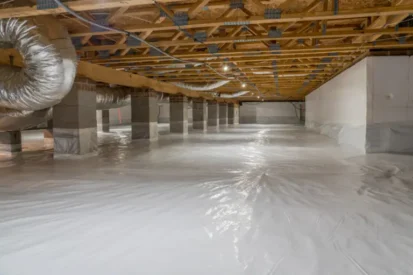
Crawl Space Encapsulation
Encapsulating an older Atlantic Beach home often starts with clearing debris and checking clearance, since many crawl spaces here are low. On flood-zone lots, the design keeps required flood openings working.
Vapor Barrier Installation
Some Atlantic Beach homes have bare sand under part of the house. A continuous vapor barrier over the ground is one of the simplest ways to cut the moisture rising from below.
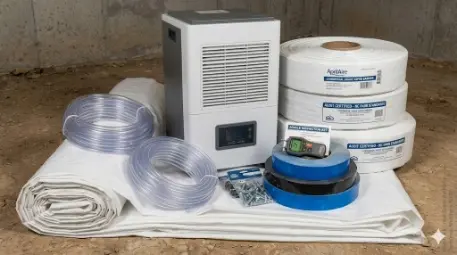

Crawl Space Dehumidification
Ocean air a few blocks away keeps humidity high all summer. In a sealed Atlantic Beach crawl space, a properly sized dehumidifier is the usual way to keep it in check.
Crawl Space Insulation
Kraft-faced insulation in mid-century Atlantic Beach homes often holds moisture and sags. Old insulation usually comes out before any sealing work so the framing can be checked.
Crawl Space Mold Remediation
Decades of humid summers can leave mildew on joists and subfloor in older Atlantic Beach homes. Treating the growth and fixing the moisture source are handled together.
Frequently Asked Questions
Is crawl space encapsulation required by SC building code?
No. Under the 2021 South Carolina Residential Code, a vented crawl space is still allowed. Section R408.3 adds the option of a sealed crawl space when the ground is covered with a continuous Class I vapor retarder, seams overlap at least 6 inches and are sealed, the edges run at least 6 inches up the stem wall, and the space is conditioned, for example with a dehumidifier sized at 70 pints per day per 1,000 square feet. Homes in flood zones also need their required flood openings kept working.
How much does crawl space encapsulation cost in Atlantic Beach, SC?
Older Atlantic Beach homes vary widely. Crawl space height and access, how much old debris or insulation has to come out, and whether the lot requires flood openings all change the scope. A free inspection gives you an accurate price for your home.
Does encapsulation add value to a home in Atlantic Beach?
With much of Atlantic Beach’s housing dating to the mid-1900s, buyers’ inspectors often look closely at the crawl space. Documented moisture control and sound framing may make an older home easier to sell, though results vary by property.
Atlantic Beach
Request a Free Inspection or Call (843) 585-3994
Not in Atlantic Beach? See the other Grand Strand communities we serve.